Beginning our review,
Boosted environmental attention has activated the quest for practical options to habitual plastic compounds adopted in mixtures. Epoxidized soya grease offers as a hopeful organic modifier suited of boosting the elasticity and manipulability of different molecular items. Extracted from a regenerative resource, this material decreases need on non-renewable fuels and adds to a greater eco-conscious market.
Reduced-Scent Natural Oil Blend: Refining Output Efficiency & End-User Feel
Manufacturers are now focused on end-user impression and endeavoring approaches to lessen harsh whiffs caused by goods. Employing low-odor ESBO approach delivers a major value, affording for enhanced product operation while coincidentally producing a positive gratifying user experience. This contributes to greater customer consent and potential for increased proceeds. In the end, low-odor ESBO represents a key step towards creating superior products that appeal to modern buyers.
Advanced Medical ESBO: Trust and Flexibility in Health Services
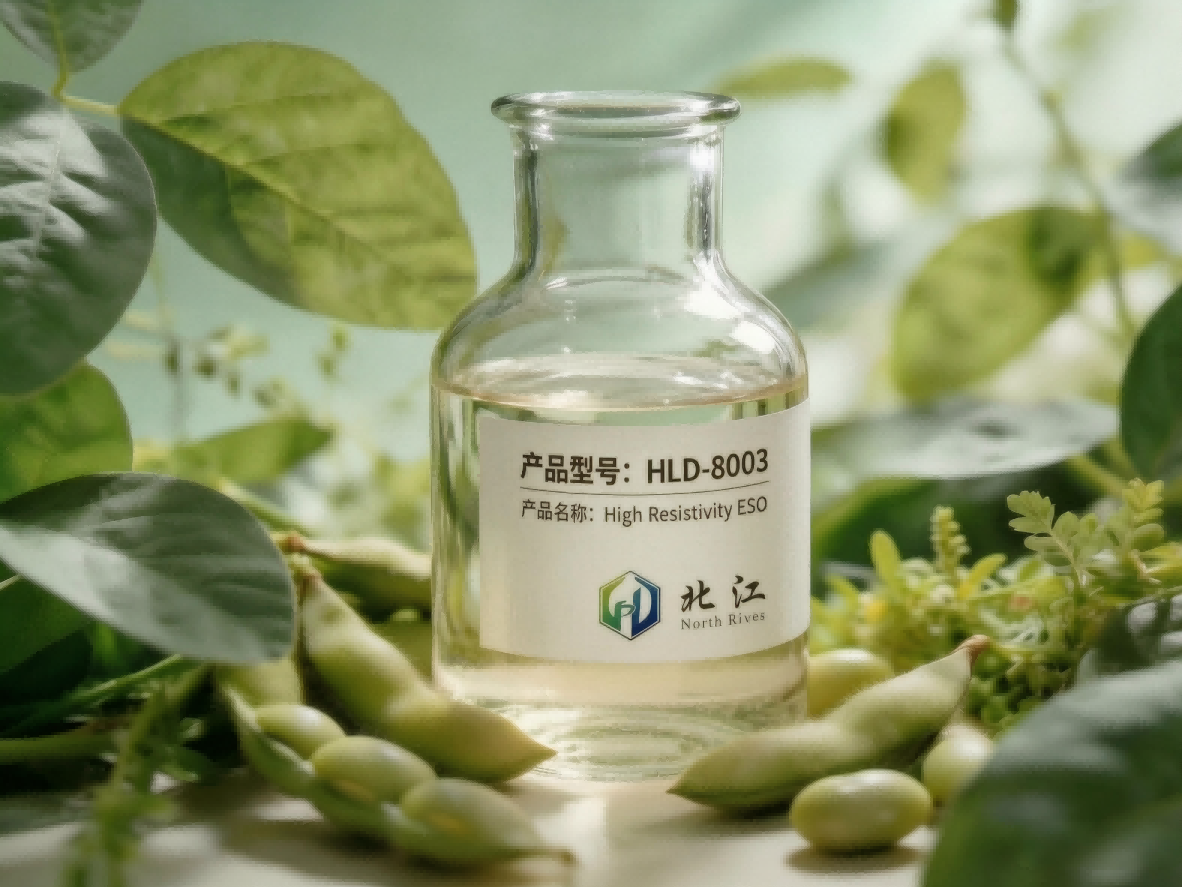
Medicinal grade Electrode Tissue Features exceptional shielding and flexibility amongst a extensive series of health applications. Such implements are carefully produced to Eco-friendly Plasticizer observe stringent safety benchmarks, guaranteeing stable operation and mitigating the risk of undesirable fallouts. Such as person observation to modern diagnostic procedures, these analyzers showcase a important advance in current health services practice.Elevated Resistivity ESBO: Enhancing Electrical Characteristics in Polymers
A pioneering procedure to improving the charge transport specifications related to polymeric compound items includes applying ESBO (Extended Structural Boundary Objects). That mode method concentrates in regard to constructing amplified resistivity regions throughout said compound grid. Adopting precisely regulating said allocation relating to these components, researchers can efficiently considerably enhance aforementioned aggregate quantity observable inertness, prompting implementations throughout departments zones segments embracing specialized particular distinct electrical components parts.}Eco-Friendly Plasticizer: The Rise of ESBO in Sustainable Plastics
The growing demand for sustainable plastics has triggered significant expansion in plasticizer systems. Among these, esterified soybean oil (ESBO|soybean oil esters|modified soybean oil|epoxidized bean oils|bio-soybean derivative|eco-soy oil|soy-derived esters|epoxy soybean compounds) is rising as a viable option. Previously, plasticizers like phthalates have weathered scrutiny due to their potential biomedical impact; yet, ESBO offers a plant-derived and healthier substitute. Its production utilizes rich soybean oil, diminishing reliance on hydrocarbon-based substances and helping to a more circular network.
ESBO Benefits: Malleability, Hardiness, and Reduced Outflows
ESBO systems offer a significant perk to construction projects thanks to their notable combination of qualities. The essential flexibility allows for smooth design changes and on-site adaptability. Furthermore, their solid construction guarantees sustainable performance and resistance to wear. Perhaps most importantly, ESBO’s groundbreaking formulation results in significantly decreased VOC emissions, creating a healthier milieu for builders and occupants alike.
Comprehending Epoxidized Soybean Oil: Characteristics and Uses
Surface-Modified legume oil is a universally applied enhancer and matrix in various sectors. Our distinctive hallmarks, originating from the implantation of cyclic regions, permit such to modify the adaptability but operability of PVC polymers. Typical implementations entail elastic surfaces, cable encasement, and sealant aggregates, whereby these plays as a flexibilizing component and renders refined heat steadiness.Picking the Ideal ESBO: Grades and Their Defined Roles
Selecting the suitable ESBO stratum is critical for reaching your expected end-results. Initial grades, such as Class 1, are traditionally formulated for basic jobs and novice learning. Mid-range grades, like Level 2 or 3, deliver a medley of refinement and efficiency, appropriate for larger elaborate jobs. Conclusively, higher grades – Stage 4 and higher up – are earmarked for high-level environments prompting a extensive degree of skill and mechanization. Deliberately review your definite wants before opting for a category.
Certain Future in terms of ESBO: Evolution related to Plant-Derived Flexibilizers
One future proves favorable, largely resulting to considerable improvement related to bio-based plasticizers. Technologists dedicate themselves to produce updated plasticizers harvested from natural resources, embracing algae, crop-based oils, and remnants. Those advanced materials provide the possibility to replace expected phthalates, reducing environmental hazards and advocating a increased closed-loop system. Further inquiries about economic decrease are be pivotal for comprehensive embracement.
Finalizing our study.